I used to manage a team of twenty people. For eleven years, my life was a relentless cycle of KPI meetings, urgent emails, and the slow, grinding erosion of my cognitive bandwidth. When I finally hit a wall—the kind that makes you stare at your bedroom ceiling at 3:00 AM wondering why you exist—I realized something terrifying: I didn't know how to rest. I only knew how to "optimize."
When I finally started trying to pick up hobbies, I made a classic mistake. I treated my leisure time like a project. If I wasn’t learning a language, training for a 5K, or building something "useful," I felt a pit of productivity guilt in my stomach. I was trying to turn my downtime into a second job. And guess what? I stayed burned out.
I started keeping a tiny, dog-eared notebook in my back pocket. Every Tuesday—not a Sunday, not a vacation day, but a regular, soul-crushing Tuesday—I would test an activity. I wanted to know: did this actually help, or was I just distracting myself from the dread?
The Trap of "Productive" Leisure
We are living in an era of productivity guilt dressed up as virtue. There is this pervasive idea that if you are doing something, it should be contributing to your "personal brand" or your bottom line. Even our hobbies are being hijacked by leisure vs avoidance the optimization mindset.
I’ve written about this for outlets like The Good Men Project—the way men are conditioned to equate their value with their utility. It's not always that simple, though. If you’re just sitting there, you’re "lazy." If you’re watching a tutorial on woodworking but never actually touch the wood, you’re "researching." It’s a lie. Pretty simple.. Distraction is not the same as recovery, and staring at a screen is rarely, if ever, restorative.
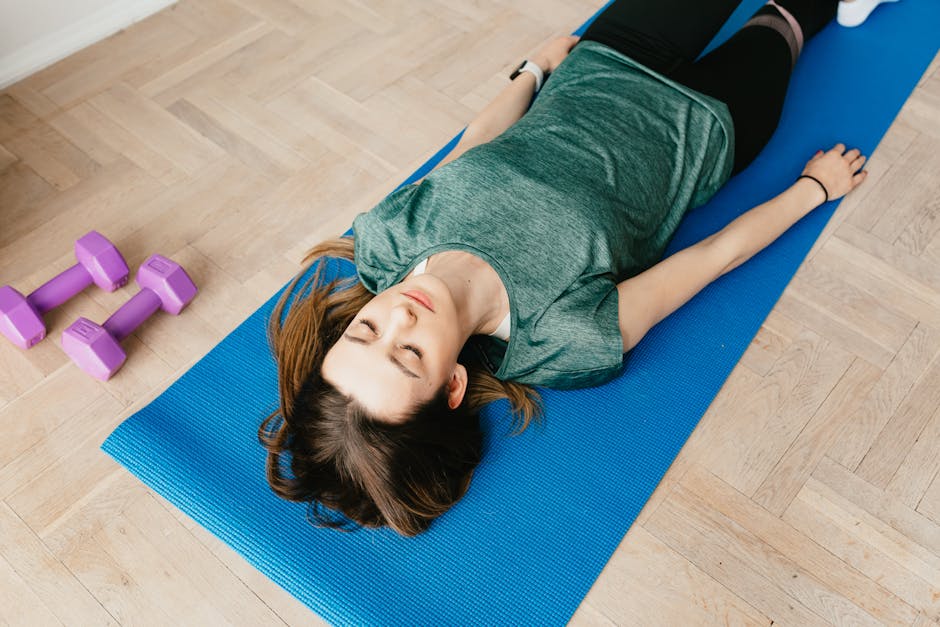
The American Psychological Association (APA) has spent decades studying the effects of work-related stress on the human nervous system. Their findings consistently point toward the need for "detachment"—the psychological act of switching off from work-related tasks. But here is the catch: if your hobby requires the same type of intense focus or decision-making as your job, your brain doesn't actually get the break it needs. You are simply shifting your attention depletion from one arena to another.
The "After-Effect Check": A Real-Life Metric
If you want to know if a hobby is actually restorative, you don't look at how much fun you’re having in the moment. You look at how you feel thirty minutes after you stop. I call this the after-effect check.
Most "leisure" activities today fall into the trap of the digital grind. Think about it: when you are doom-scrolling or playing a game that demands constant, rapid-fire cognitive input, your brain isn't resting. It is, ironically, working harder. It’s working in the same way your brain works when it’s forced to navigate those annoying Cloudflare Turnstile challenge pages or endless reCAPTCHA verification grids just to access a website. You’re processing patterns, solving puzzles, and staying in a state of high-alert, low-reward cognitive labor.
To perform the after-effect check, ask yourself these three questions after an activity:
Do I feel a genuine "refreshed feeling," or do I feel like I need another cup of coffee to face reality? Did I lose my sense of time, or was I constantly checking the clock/notifications? If I had to do this while exhausted, would it feel like a relief, or would it feel like another chore?
Interactive vs. Passive Leisure
My notebook taught me that there is a massive difference between passive consumption and restorative engagement. In professional circles—like the systems analysis we might see in companies like MRQ—we talk about input vs. output. Leisure is no different.
The Comparison Matrix
I’ve categorized several common activities in my notebook to see which ones actually pass the test on a Tuesday evening.
Activity Type After-Effect Score (1-10) Why? Doom-scrolling Passive/Digital 2 High stimulation, zero creative output. Leaves you drained. Playing Competitive Video Games Interactive/Digital 4 Requires intense decision-making. Feels like "work." Physical Woodworking/Gardening Interactive/Physical 9 Engages the body, silences the "manager" part of the brain. Reading Fiction Passive/Analog 8 Allows for immersion without decision fatigue.The hobbies that consistently scored above an 8 were those that required some level of physical movement or creative flow without the pressure of "completion" or "utility." Notice that passive, high-stimulus activities (like scrolling) actually drain your attention. This is attention depletion in its purest form. You aren't resting; you’re just feeding your brain more input to keep it from dealing with the silence.
Leisure Awareness: Reclaiming Your Brain
True leisure awareness is the ability to stop and say, "I am choosing this activity because it helps me reset, not because I am avoiding my to-do list." When you stop using hobbies as a way to "check out" or "numb out," you start using them as a way to recover.

For me, on a Tuesday, that looks like thirty minutes of sharpening my kitchen knives or simply walking without headphones. It isn't "productive." It doesn't earn me money. It doesn't build my social media presence. But the after-effect? It’s real. It’s the feeling of having enough bandwidth left over to be present with my family when the workday actually ends.
Three Rules for Testing Your Own Hobbies
- The Analog Rule: If it involves a screen, it’s probably not resting your brain. Try to minimize digital interaction during your downtime. The Tuesday Test: If you can’t enjoy it on a tiring Tuesday, it’s not a hobby—it’s an escape. Escape is fine, but don't confuse it with recovery. The Utility Trap: If you find yourself thinking "I could monetize this" while doing it, stop. That thought is the enemy of restoration.
Why "Distraction" Isn't "Lazy"
I often hear people call themselves lazy because they can't focus on a book or a hobby after a long day. Let’s be clear: you aren't lazy. You are likely suffering from deep attention depletion. When your brain has been forced to navigate administrative friction—like dealing with broken software, endless login verifications, or the modern workplace’s demand for constant cognitive switching—your "battery" is physically drained.
Don't beat yourself up for needing to distract yourself. Just be mindful about *what* you use to distract yourself. Instead of the digital equivalent of a reCAPTCHA, reach for something that forces a different kind of brain engagement. Pick up a pencil, start a fire, move a rock from one side of the yard to the other. Do something where the outcome is tactile.
The goal isn't to be a "productive man" in your spare time. The goal is to be a human being who has the capacity to enjoy their life. That starts by realizing that your time is not a resource to be optimized; it’s a space to be lived in. Keep a notebook. Test your Tuesdays. You might find that the best way to handle the pressure of the modern world is to stop trying to conquer your leisure and start letting it heal you.